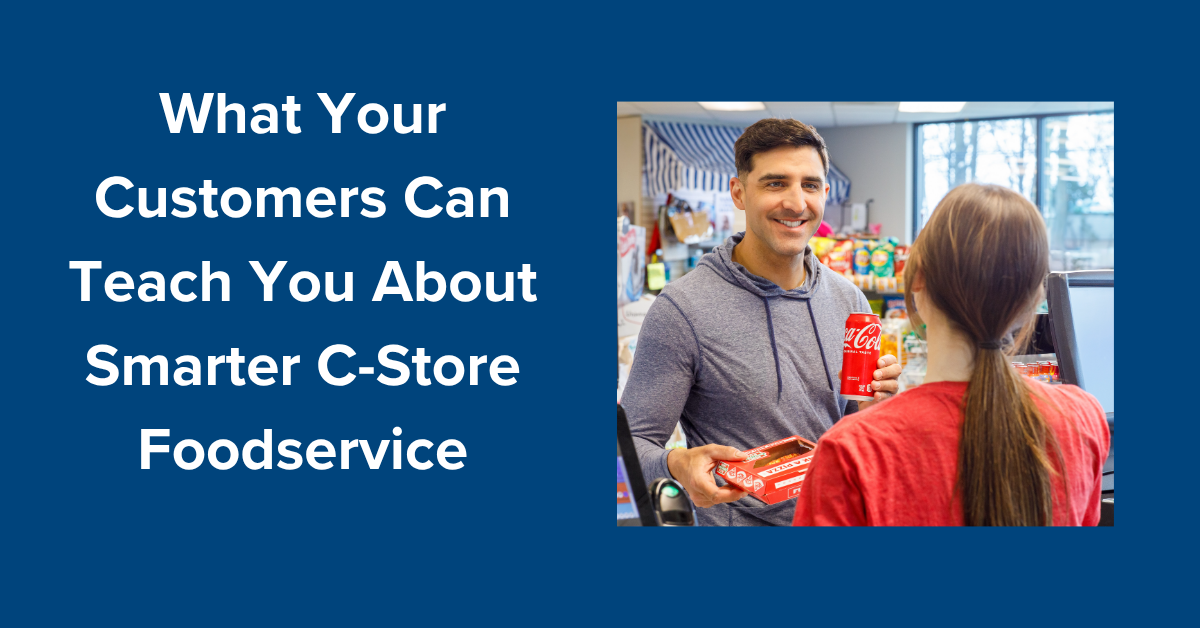
Using Customer Behavior to Improve Layout, Timing, and Promotions
If you watch closely, your regular customers will tell you exactly how your in-store foodservice program is working.
They do it without surveys or feedback forms. They tell you by where they pause, what they skip, when they show up, and how quickly they move through the store. Different audiences interact with your foodservice program in different ways, and each one reveals something useful about your layout, timing, and promotions.
Running a smarter foodservice program inside your c-store isn’t about chasing every type of customer. It’s about paying attention to the ones you already serve and learning from how they use your space.
This post looks at four common customer groups and what each one can teach you about making better foodservice decisions that also improve the overall store experience.
Students: The Ultimate Test of Clarity and Speed
Students are some of the most honest foodservice customers you’ll ever have. They don’t slow down to figure things out, and they don’t tolerate friction.
If food options aren’t obvious, they move on. If pricing isn’t clear, they hesitate. If the food area feels cluttered or confusing, they wander or skip food altogether.
Watching how students move through your foodservice area can quickly highlight problem spots.
- Do they bunch up near the warmer?
- Do they ask questions about deals that should be clear?
- Do they circle the same area before committing to a purchase?
Students show you whether your foodservice layout supports fast, grab-and-go decisions. They also reveal whether promotions make sense at a glance. If a student has to ask what a food deal includes, it’s probably too complicated.
When your foodservice program works for students, it usually works better for everyone else.
Working Professionals and Commuters: A Lesson in Timing and Consistency
Professionals and commuters are creatures of habit, especially when it comes to food. They stop at predictable times, buy familiar items, and expect the same experience every visit.
This group is especially helpful for identifying foodservice timing gaps.
- Do they only buy food in the morning?
- Do they buy during the lunch period?
- Do they stop for coffee first thing in the morning, but not pizza or hot food later in the day?
If professionals aren’t choosing your foodservice program outside their usual routine, it’s often a timing or visibility issue. Food may not be ready when they need it. Lunch offers may not be clear. The store may not signal that hot food is available during their window.
This audience reinforces how important consistency is. When food timing slips or availability feels uncertain, professionals notice quickly—and adjust their habits.
Drivers, Travelers, and Work Crews: Clarity Wins Every Time
Drivers and travelers, including delivery drivers, construction crews, and road workers, are some of the most outcome-focused foodservice customers you’ll serve. They’re deciding where to eat while they’re already in motion.
This group is especially sensitive to foodservice visibility.
- Can they tell from outside the store that hot food is available?
- Is lunch clearly ready, or does it feel like a gamble?
- Are food offers easy to understand without explanation?
They’re also a strong test of whether your foodservice program works for first-time visitors. Drivers don’t have time to explore. If the path from door to warmer to checkout isn’t intuitive, they won’t linger.
Construction and labor crews add another layer. They often buy food for more than one person and eat on the go. They notice portion size, value, and whether the food holds up if it’s eaten later.
If this group isn’t converting, the issue is rarely the food itself. It’s almost always clarity, timing, or flow.
Local Regulars: Your Foodservice Early Warning System
Local customers see your foodservice program over and over again. They notice when signage changes, when food quality slips, and when availability feels inconsistent.
Because they’re familiar, they’re also the first to drift away when something stops working. That makes them incredibly valuable as an early signal.
Pay attention to what locals comment on.
- Are they asking about a promotion that disappeared?
- Are they mentioning that food used to be ready earlier?
- Are they stopping less often for pizza or hot items?
Local regulars show you whether your foodservice program is maintaining consistency over time. When locals stay engaged, it’s usually a sign that the fundamentals are solid.
Look for Patterns, Not Preferences
The goal isn’t to customize your foodservice program for every audience. It’s to look for overlap.
If students struggle to understand a food deal, travelers probably do too.
If professionals skip lunch, drivers likely aren’t stopping either.
If locals drift away, new foodservice customers won’t stick around long.
Patterns across audiences point to foodservice improvements that benefit the entire store.
Use What You See to Make Small Foodservice Adjustments
You don’t need a full menu overhaul to run a smarter foodservice program. Most improvements start small:
- Adjusting when food is ready
- Simplifying a food promotion
- Improving visibility of the warmer or signage
- Reducing friction between food selection and checkout
Different audiences help surface those opportunities faster. They’re already showing you what’s working—and what isn’t—through their behavior.
Frequently Asked Questions About Serving Multiple Foodservice Audiences
Q: Do I need different food offers for different customer groups?
Not usually. Clear, simple food offers tend to work across audiences. Timing and visibility matter more than customization.
Q: Which audience should I pay the most attention to?
Watch where behaviors overlap. That’s often where foodservice improvements have the biggest impact.
Q: How can I tell if foodservice layout is an issue?
Watch where customers hesitate or double back near the warmer or prep area. Confusion shows up in movement before it shows up in sales.
Q: Are drivers and construction crews really that different from locals?
They behave differently, but they highlight foodservice issues faster, especially around clarity and speed.
Q: Can my TBHC Delivers Account Manager help with this?
Yes. Your Account Manager can walk the store with you, observe foodservice traffic patterns, and help identify small changes that improve flow and visibility.
Let Your Foodservice Customers Do the Teaching
You don’t need to guess what your foodservice program needs. Your customers are already showing you.
By watching how different audiences approach your food offerings—and when they choose to stop or skip—you gain insight that no report can replace. A smarter foodservice program improves not just food sales, but the overall store experience.
When you listen to what customer behavior is telling you, better decisions tend to follow naturally.
Subscribe to TBHC Delivers Toppings
Subscribe to TBHC Delivers Toppings today and gain access to tips, strategies, and tools that can help you achieve success. Our monthly emails are filled with the latest content to assist you in unlocking your program’s full potential and boost your profitability.
Grab this opportunity to elevate your sales – Sign up today!
TBHC Delivers
TBHC Delivers is the largest distributor of Hunt Brothers Pizza; we are our own business and brand. We own our trucks and follow, believe and deliver on all Hunt Brothers Pizza’s visions. TBHC Delivers builds upon the high-quality products of Hunt Brothers Pizza with value-add customer service.